
How This One Change Dramatically Improves My Focus
Have you ever felt completely drained and unable to concentrate at work in the afternoons? One minute you're powering through your to-do list, and the next, you're struggling to keep your eyes open...

Disclaimer: The productivity advice I'm about to share is derived from my personal experience, recognizing that there are differing opinions on this subject. For individuals considering adopting a similar approach, it is advisable to consult with a medical professional, as each person's health needs and circumstances are unique.
Reading time: 8 minutes
Introduction
Have you ever felt completely drained and unable to concentrate at work in the afternoons? One minute you're powering through your to-do list, and the next, you're struggling to keep your eyes open and focus on even the simplest tasks. I believe we've all experienced that fatigue and lack of mental clarity when we need it most.
But have you ever stopped to think about when exactly you feel most focused and energized versus when you tend to hit those low points? For many of us, our energy and concentration peak early in the day after a good night's sleep, then gradually decline as the hours pass. By mid-afternoon, we find ourselves drained, desperately turning to coffee or sugary snacks to make it through.
I Quit Eating “Breakfast”
It's been a little while, but I'm back with something I find truly insightful to share, as promised. Well, I've finally discovered something that has worked wonders for me – a low glycemic index breakfast. That's right, no more instant oatmeal, cornflakes, or doughnuts in the mornings. I feel even more focused at work when I drink only warm water or caffeine-free tea.
The Breakfast Myth
For years, we've been told that breakfast is the most important meal of the day. Food companies have spent billions convincing us that skipping it is nutritional sabotage. But is breakfast really a necessity? Or is it just a brilliant marketing ploy?
The concept of breakfast has evolved significantly over time, shaped by cultural, economic, and technological factors. Here's a brief overview of its evolution:
Middle Ages: breakfast was often frowned upon and seen as something only peasants had to resort to, as the Church associated it with overindulgence and gluttony.
16th Century: Breakfast as a regular meal became more common in Western Europe, particularly among the wealthier classes.
19th Century: The Industrial Revolution transformed breakfast from an indulgence to an expectation, as people needed a hearty meal before long work days in factories and offices.
Late 19th century: Religious health reformers like Seventh-day Adventists promoted vegetarian diets and bland, whole wheat foods like breakfast cereals as a way to improve health. This helped popularize breakfast cereals invented by James Caleb Jackson and John Harvey Kellogg.
1920s: Public relations pioneer Edward Bernays helped make bacon and eggs a more popular American breakfast by promoting it as a healthier option, in order to promote sales of bacon on behalf of Beech-Nut, a packaging company that had diversified into food production.
The belief in the benefits of breakfast for health and productivity often exceeds the strength of scientific evidence. This is due to biased reporting in research and the misuse of causal language, which can distort our understanding. Additionally, much of the evidence comes from observational studies, which can only establish associations, not causation.
Listen to Your Body's Signals
Therefore, it's crucial for you to approach your breakfast habits with a sense of curiosity and self-awareness. Rather than adhering strictly to generalized recommendations, experimenting with different breakfast routines can empower you to discover what truly works best for your unique physiology and lifestyle.
You might find that a hearty breakfast kickstarts your day with energy and focus, while others might thrive on a lighter meal or even intermittent fasting. By paying attention to how your body responds to different breakfast choices, you can tailor your morning routine to optimize your health and productivity.
What Works For Me: The Low Glycemic Approach
The idea isn’t really about eating breakfast or not, but rather, adopting a low glycemic index meal plan for effective blood glucose regulation. When we eat, the substances from our food enter our bloodstream and interact with our brain, influencing our focus and attention.
A key player in this process is glucose, which acts as fuel for our brains, keeping them alert and active. Imagine it like gasoline in a car; we need a steady supply to keep going smoothly.
The fascinating part is that we have control over how we release glucose into our bloodstream, affecting our brain function. Some foods release glucose quickly, while others do so more slowly and steadily.
Our brains function optimally with around 25 grams of glucose circulating in the blood, akin to the amount found in a banana. — Dr E. Leigh Gibson
Here's where it gets interesting: getting those 25 grams of glucose into your system can be achieved in different ways. You could opt for a plate of pancakes or a bowl of oats. Initially, there might not seem to be much difference in how your brain reacts. Both can provide a short-term boost in alertness.
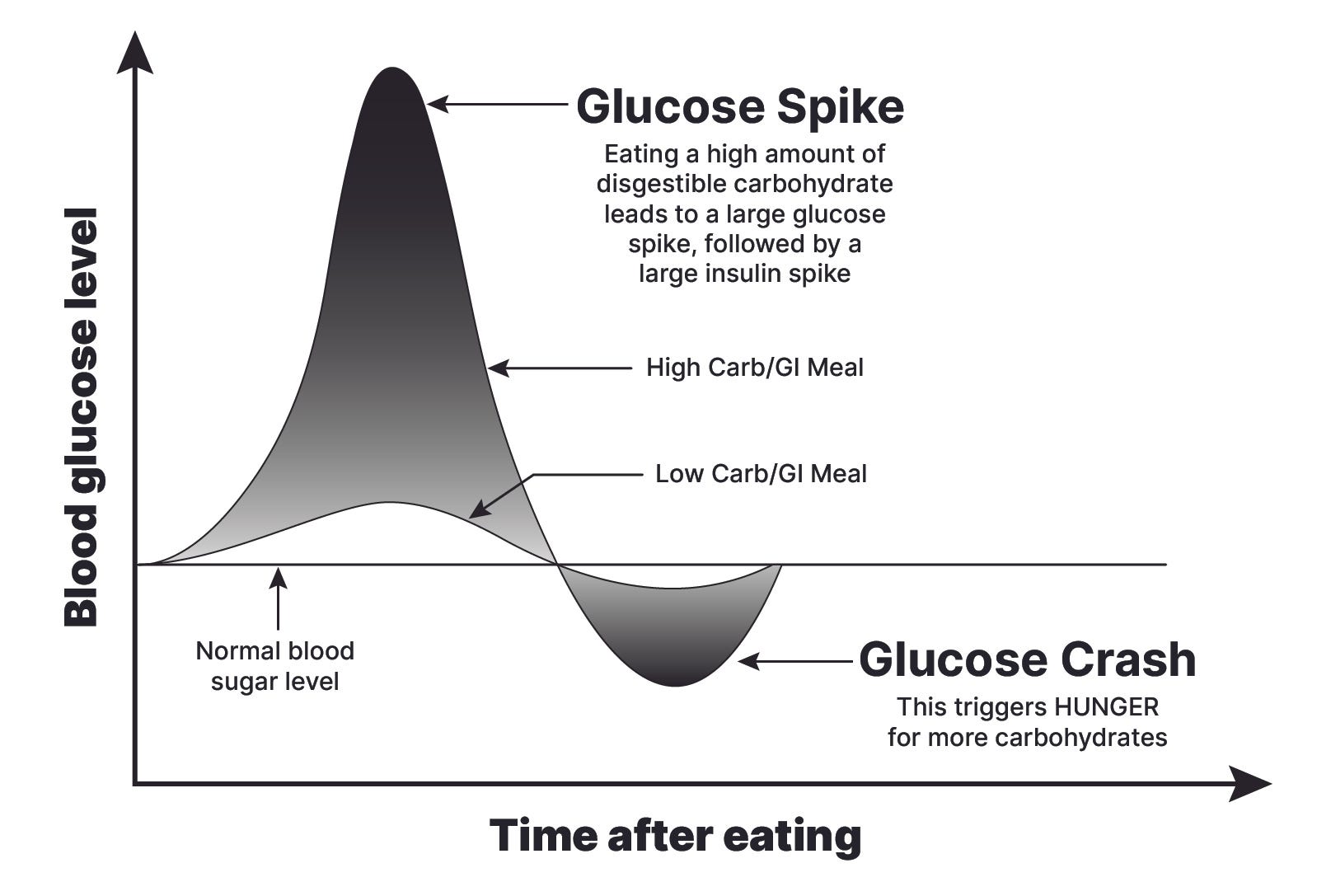
However, over the course of a typical day, the effects diverge significantly. Eating a pancake causes a rapid spike in glucose followed by a steep drop, leaving you feeling unfocused and easily distracted. It's like flooring the gas pedal until you've depleted your fuel.
On the flip side, oats release their sugar more slowly, resulting in a steady glucose level and better focus and attention. This discrepancy in how foods affect our blood sugar levels is what's termed the "glycemic index" (GI). Foods with a low GI gradually release glucose into the bloodstream, minimizing blood sugar swings and optimizing mental focus.
Quality low GI carbohydrates, broken down slowly by the body, provide sustained energy and help with concentration, keeping you feeling full for longer and reducing cravings to overeat. Conversely, high GI foods cause rapid spikes and crashes in blood sugar, which triggers hunger for more carbohydrates.
Since glucose is the brain's preferred source of fuel, maintaining stable blood sugar levels is crucial for regulating mood and overall well-being.
My N=1 Experiment
The first few days were challenging as my body adjusted to eating less, and I fought the urge to snack. However, by the third day, something remarkable happened - my late-morning brain fog disappeared, and my focus sharpened significantly. No more yawning or nodding off at my desk for extended periods.
Before switching to a low-GI breakfast, I would hit an afternoon slump around 11:30 am, making it tough to stay alert for the rest of the workday. I'd find myself yawning uncontrollably, and my energy levels would plummet.
Whereas I used to feel sleepy by noon, I now only start feeling that afternoon dip around 4:15 pm. And a quick walk or 3-minute workout easily re-energizes me. I also noticed much more stable energy levels throughout the day, without those uncontrollable cravings for caffeine or sugary snacks.
To confirm the effectiveness, I even went back to my usual breakfast of peanut butter sandwich cookies or white bread with Milo for three days. Almost instantly, I began feeling sluggish by noon, and by 2:30 pm, I was practically nodding off at my desk. Reverting to a low-GI breakfast immediately showed improvements.
Has switching to a Low GI breakfast been a miracle cure? Almost - I still experience moments of difficulty concentrating at work, often due to heavy lunch meals and low-quality sleep. However, overall, there's been a significant improvement in my mental clarity and ability to concentrate throughout the day.
How to Get Started
Know Yourself: Understand your current eating habits, preferences, and dietary goals. Notice any patterns or trends regarding meals that leave you feeling sluggish, unfocused, or hungry shortly after eating.
Consult Medical Professionals if Necessary: If you have any underlying health conditions, such as diabetes or metabolic syndrome, consult with your healthcare provider or a registered dietitian. They can offer personalized guidance tailored to your specific needs and medical history.
Identify Your Favorite Low-GI Foods: Take some time to research and identify low-GI foods that you enjoy. This could include a variety of fruits, vegetables, whole grains, legumes, lean proteins, and healthy fats. Making a list of these foods can help you plan your meals effectively.
Experiment: Start incorporating low-GI foods into your meals and snacks, with breakfast being a great place to start. Experiment with different recipes and cooking methods to find delicious and satisfying ways to enjoy these foods. Keep track of how you feel after eating low-GI meals, noting any changes in energy levels, hunger, and overall well-being.
Gradually Replace High-GI Foods: Gradually swap out high-GI foods in your diet with low-GI alternatives. For example, replace white bread with whole grain bread, white rice with brown rice or quinoa, and sugary snacks with nuts or seeds. Making small, sustainable changes over time can help you transition to a low-GI lifestyle more comfortably.
Final Thoughts
The low GI lifestyle is not about quick fixes or fad diets; it's about making sustainable, healthier choices that fortify your body and mind. It's an antidote to the energy crashes that can sabotage your focus and productivity.
Remember, this isn't about following a restrictive diet or cutting out entire food groups. It's about making smart choices that work for you and your lifestyle. Start small, perhaps by swapping out your usual high-GI breakfast for a low-GI alternative.
Ultimately, this is about discovering what works best for your unique needs. Experiment with different food choices and pay attention to how your body responds. In the end, true productivity is about having the energy and focus to show up as your best self in all areas of life.
Resources
Following is the information from the University of Sydney that I found very useful for anyone who wants to research more or get started on a Low GI lifestyle.
Following along with what you are saying I did that same transition a few years ago. Then I took ti one step further and you might like to try this as well.
You described the Glucose issues beautifully. I discovered that I don't really want or need to have glucose. I could use Ketones and approach it a little more focused.
I have a bowl of nuts and my supplements at about 10AM and then go till after work to have what most people would call lunch - mainly consisting of eggs. It's amazing how many different ways one can make eggs and maybe add some bacon.
I know you will say: Axel, if you do that Dinner will be late.
That's true but it's ok as it is fine to crash after dinner and going to bed after the crash or some YouTube videos works well.
Maybe you like to try it, applying teh smae warning as you gave under "Get Started".
Brilliant post! Thank you for sharing. Sometimes, I also try some unconventional ideas to reduce natural tiredness or avoid afternoon slams. I do that especially on Saturdays when I focus on Substack content.